

Key Takeaways
Wayfinding is the foundation of the mall experience and connecting it to signage and advertising turns it into a commercial asset.
Every wayfinding interaction is a high-value advertising moment, so the infrastructure can help fund the mall.
One platform across every property removes vendor sprawl and gives operators control at scale.
Malls Are Destinations
While malls have always been places to shop, they’ve also always been places people go to spend time together.
With the increase in online shopping, malls and shopping centres need to make it clear that they’re day-out-destinations that offer more experiences than online shopping. 73% of Gen Z (people born between 1997 and 2012) visit a mall monthly. These are tech savvy consumers who barely remember a world without the internet and social media. They want a joined up, digital experience that helps them explore.
This means there’s more pressure than ever on operators like you to prove this value to shoppers, as well as to your tenants and advertisers.
One challenge you face is that most malls are running wayfinding, signage, tenant communications and advertising on separate systems from separate vendors. There’s nothing wrong with this in principle, and it makes sense that as new technology has been introduced you’ve found the best option for your mall, often resulting in tech from different places.
The challenge here is getting all this software to communicate, meaning that shoppers and tenants get a consistent experience across all your platforms. Your shopping mall’s wayfinding kiosks should offer more than just maps. They need to integrate all your communications tech in a unified way, giving shoppers a connected mall experience.
From Static Mall Directory to Spatial Layer
Static signage and disconnected digital directories fail in large, multi-level, multi-anchor buildings. They limit discovery, as shoppers will search for the shops they want to visit, ignoring irrelevant promotions or opportunities for exploration when there’s no incentive for them to.
Modern shopping mall digital wayfinding uses 3D landmark-based navigation with integrated programmatic advertising, tenant directories with search alongside intelligent suggestions based on the location of the user and their preferences, category filters, tailored offers and live store info. These wayfinding kiosks can be enhanced further by including gamification, such as interactive ads, or the ever-popular selfie features, which we often see shoppers using to show off their shopping hauls.
Your mall’s interactive wayfinder should include turn-by-turn routing that can be handed off to a mobile device, accompanying shoppers all the way from the kiosk to the door of their destination. It should also reflect tenant updates as soon as they make them, without tenants needing to update their info across multiple systems or needing to talk to several departments to update their opening times. Plus, your mall’s directory can highlight changes, so that regulars can see any changes to their favourite store’s location or hours of operation.
Every Search is a Commercial Moment
Shoppers searching for a restaurant, store or event are engaged and attentive. They may be looking for directions from A to B when they first start using your kiosk, but if the content on your wayfinder is integrated with advertising and tenant communications that go beyond simple promotion and actually consider the customer journey, then they turn this simple search into a revenue generation opportunity. This makes your mall’s digital wayfinding kiosks some of the highest-value inventory in the building.
When your kiosks aren’t in use, they can show tenant-sponsored promotions, third party DOOH network integration, and content with contextual triggering based on time, zone or upcoming events.
This promotion comes with verified playout data and impressions tracking so you can show advertisers proof of how their ads are performing. As operators, you can also gather data about the most popular searches, helping you understand shopper trends.
If your kiosks integrate a selfie feature, this is a great social proof marketing channel, especially if the selfies are branded and you make it easy for shoppers to upload their pictures directly to social media. 92% of consumers trust recommendations from friends and family over any form of paid advertising, according to Nielsen’s Global Trust in Advertising report, making this a huge revenue opportunity when shoppers share their selfies.
One Content Engine for Every Screen and Zone
Managing atriums, entrances, concourses, food courts and anchor courts across several vendor systems can be a huge challenge. Often, an update to one doesn’t cascade to the others, meaning shoppers end up with incorrect information and vendors become frustrated.
A unifying Connected Space Infrastructure layer allows for automated scheduling, events, seasons and campaign-triggered switching, and multi-zone orchestration without the disconnect.
This integration doesn’t only apply to digital wayfinding kiosks. It can connect to your LED walls, video floors, hanging displays, totems and digital pillars too, providing a unified experience across your entire shopping centre.
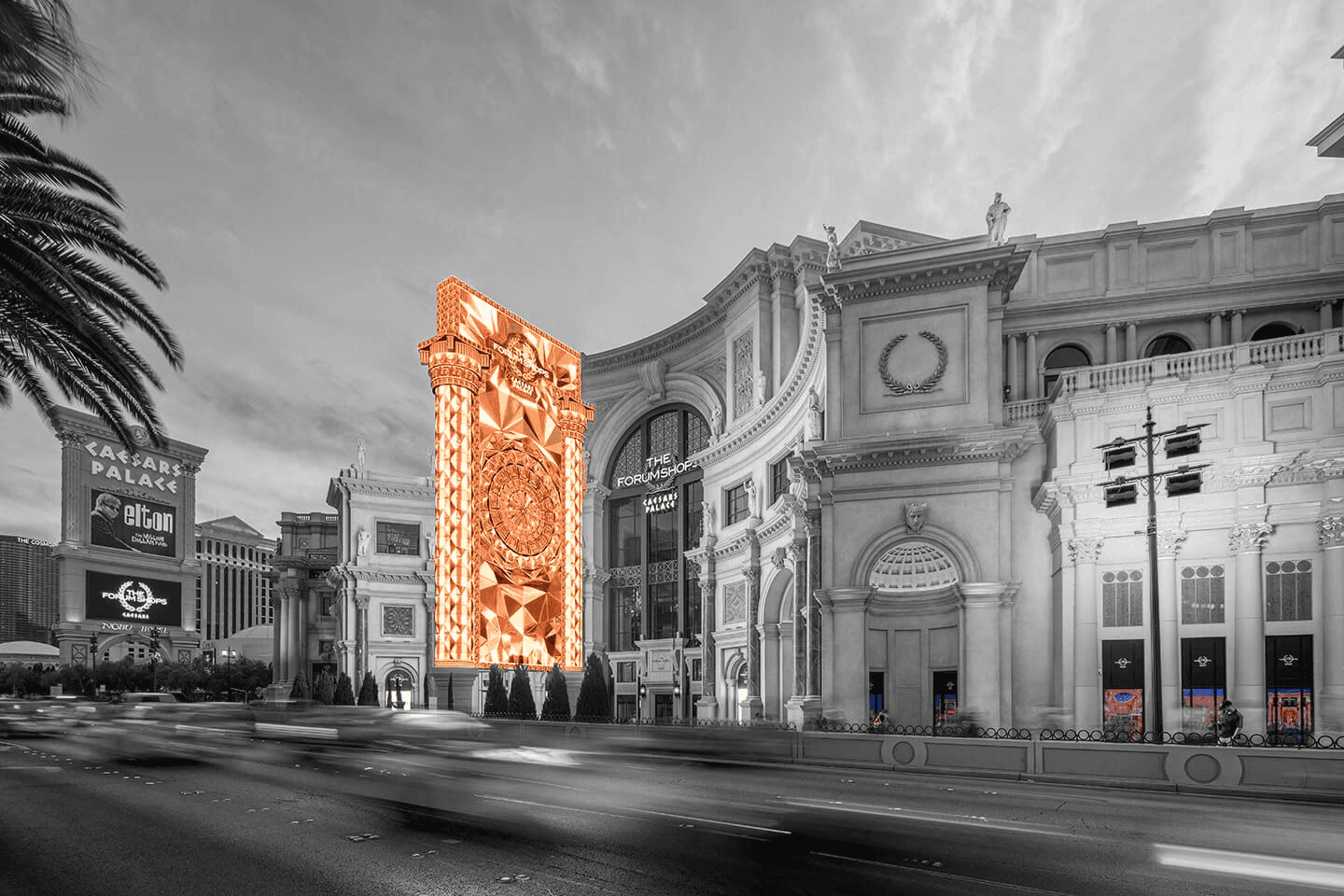
StudioDX not only powers the totem outside the Forum Shops in Las Vegas but connects to smaller screens that sync with the content playing on the totem. This means that if shoppers are too close to the totem to see the content, they can still see it on the smaller screens outside and throughout the mall. The content adapts depending on the shape, size and location of the screen.
There are operational uses beyond marketing too, with opportunities for centre-wide announcements and safety messaging.
Giving Shoppers a Reason to Stay Longer
Malls and retail centres are often full days out, with shopping, dining and entertainment options all under one roof. But there are lots of shoppers who come to your mall for one thing and don’t realise you’ve got more to offer them.
Interactive shopping mall wayfinding kiosks are a great way to promote the rest of your malls offering. While idle, they have lots of room for content and ads that highlight dining and entertainment options.
For those shoppers who are already making use of all your facilities, wayfinding and digital signage can increase their dwell time even further through built in selfie features, branded interactive games, gamification overlays for loyalty schemes and seasonal campaigns. These features keep shoppers on-site for longer and encourage them to engage with your wayfinding kiosks, which in turn provide opportunities to share relevant promotions with them.
These interactive experiences run from the same platform without specialist hardware, and one campaign can extend from kiosk to mobile, website and loyalty app, engaging shoppers long after they’ve left the property.

Proof at Scale: What Simon Property Group Learned
Simon Property Group’s rollout of Wayfinder across 95 mall locations resulted in standardised navigation, integrated promotions and new advertising opportunities.
"Simon's Interactive Directories have helped visitors to our shopping centers navigate the space and interact with brands like never before, resulting in a wealth of analytical data that's continuing to help us shape and evolve the retail experience, providing us a tremendous flexibility for crafting messages for each center.", shared Chip Harding, SVP of Business Development at Simon Property Group.
This privacy-safe analytical data tells operators like you the most searched stores, busiest zones and how many times offers were viewed and used which informs leasing conversations, tenant mix and campaign planning. It gives you the opportunity to highlight zones with lower footfall and repeat or adapt offers that were successful. This data also helps you in conversations with tenants over promotion, giving them clear numbers on how an investment in advertising is likely to impact them.
One Platform, Every Property
A compounding problem for portfolio operators is with each new site often comes new vendors, contracts and overheads. Not only can this be hard to keep track of, but it also leads to inconsistencies across the entire portfolio.
Simon Property Group used Wayfinder across 95 properties, resulting in consistency for shoppers, and a consistency in data reporting. What was learnt from one mall could be applied to others in the group, meaning less time spent on testing and more time running what works.
Multi-property mall management needs different levels of control. Central governance for means that each property has the same consistent wayfinder experience, but property-level flexibility means changes can be made more efficiently without needing to contact head office for changes each time. Network wide campaigns can be deployed in minutes, with local overrides for any properties where the campaign isn’t a good fit, or where there are additional promotions.
Wayfinder is API-first and hardware agnostic, meaning it works with existing screens and property systems. If you do want to upgrade your technology, we work with many trusted partners who can support you in getting the kiosks and screens you need to take your mall’s digital wayfinding to the next level.

From Infrastructure to Advantage
Static wayfinding is a cost that can’t adapt to your ever-changing mall. Connected Space Infrastructure is a commercial asset that drives revenue in a way that static wayfinding can’t.
If you’re ready to connect your shopping centre, book a mall demo to learn more about Connected Space Infrastructure for malls and retail centres.
what's next
Want to know more?
Book a consultation with our experts
By submitting this form you agree to our terms.