

Venues around the world are suffering from a technology fragmentation problem. They’re running on a CMS from one vendor, wayfinding from another, a media server from a third; the list goes on.
Connected space infrastructure is the unifying layer that integrates all this technology and software together, giving operators the visibility and ability to make more informed decisions about their space.
The Problem With Managing Complex Spaces in Pieces
So, what’s led to this fragmentation? Technology tends to progress quite separately, and a lot of tools traditionally used around large spaces, like physical signs and maps, are now moving to digital. This comes alongside other digital tools, such as capacity tracking sensors, smart cameras that can identify different activity such as bottlenecks forming, and the general public’s usage of mobile devices.
Over the years, many operators have added bits of software to their space when the need has arisen, or when the technology has arrived, which means that most venues have added technology at somewhat random intervals over the years. This results in separate tools for each problem, which rarely talk to each other.
Often this tech is being developed in a silo too, with developers forgetting the different ways it needs to integrate with existing tech.
This fragmentation is often invisible until you start to lose track of which piece of software is doing what, and when you need this siloed software to communicate to get a real picture of how your space is operating or to communicate with the public consistently.

A great example of how this fragmentation can show itself is in airports. If a gate changes, it triggers a domino effect across the entire airport. Screens need to be updated all over the premises, staff need to be informed, and the mobile app needs to reflect the change too. Plus, if screens were running contextual ads near the gate, for example, promoting amenities only suitable for a long haul flight, then if the gate changes to accommodate a short haul flight passengers may become frustrated when they realise the promotions aren’t relevant to them.
Overall in this situation, passengers are reading one story at wayfinding kiosks, hearing another from staff, seeing another on FIDs boards and becoming stressed and annoyed, a combo no one wants in their space.
Healthcare is another example of a space where there’s a lot of fragmentation because of the amount of software and technology needed to power the space, but despite all that tech, hospitals especially are still know around the world for being hard to navigate. Healthcare leaders have identified the same problem as airports, in that they have plenty of technology, but it’s not communicating on a technological level, let alone with patients or staff.
Connected space infrastructure connects these different aspects together, ensuring that all your screens, your app, your website and any other ways you communicate with your visitors and staff are telling the same story.
What Connected Space Infrastructure Means
Connected space infrastructure is the unified intelligence layer that lets operators manage, synchronise and optimise visual communications, navigation, operational data and partner integrations from one infrastructure.
It’s made up of two layers; the visual layer and the spatial layer.
The visual layer is anything visitors see, so think digital signage, visual experiences, your app, your website and advertising. Thinking of these as part of the visual layer means a shift in considering how your space comes to meet your visitors, rather than them needing to know how to look for guidance in your space.
The spatial layer is anything that controls how people move around your space, such as wayfinding and sensors. Thinking of these elements as the spatial layer means considering the physical environment to be a system, not just a collection of screens or waypoints
In many spaces these layers are treated separately and then are fragmented further with lots of different software or tech being used for each layer. This isn’t necessarily a problem as long as all that software and tech is communicating.
Connected space infrastructure is the layer under all your software that links it together.
This is why our StudioDX and Wayfinder interconnect so well. They run on the same Acquire Engine, meaning they easily interlink and create this unified layer which then connects with the rest of your space’s tech stack to ensure every way you communicate with visitors is connected, avoiding mixed messages which lead to confusion.
Why Connected Space Infrastructure Matters Now
Technology is only advancing, meaning new products that solve new problems, adding to your already fragmented tech stack. Complexity in large complex spaces, like airports, hospitals, arenas and campuses is only increasing with more touchpoints, more data sources and more partner integrations. Visitors expect to get around your space with ease, rather than dealing with the same struggles they’ve always had. On top of this, operators like you are being asked to do more with the same headcount.
The current one-point solutions were never designed to talk to each other. The assumption that they can be stitched together later is a bit of a trap, but that doesn’t mean they can’t. Connected space infrastructure is the layer that helps your software and tech communicate and perform as one big unit that runs your space while collecting information about what is and isn’t working.
What Connected Space Infrastructure Looks Like in Practice
In practice, connected space infrastructure gives you a one platform view of all your technology, that connects them together, meaning changes are reflected across signage and navigation simultaneously with partner integrations feeding live operational data. While there may still be occasions where you want to update your digital signage manually, the connected space infrastructure layer will allow your tech stack to share data. This means that data from one piece of software can trigger a change across the others. If sensors pick up that a bottleneck is building up in one area of your venue, signage will update to direct guests elsewhere, and wayfinding kiosks will suggest alternative routes. Staff will be alerted that they are needed in this busier area to help reduce the bottleneck even faster.
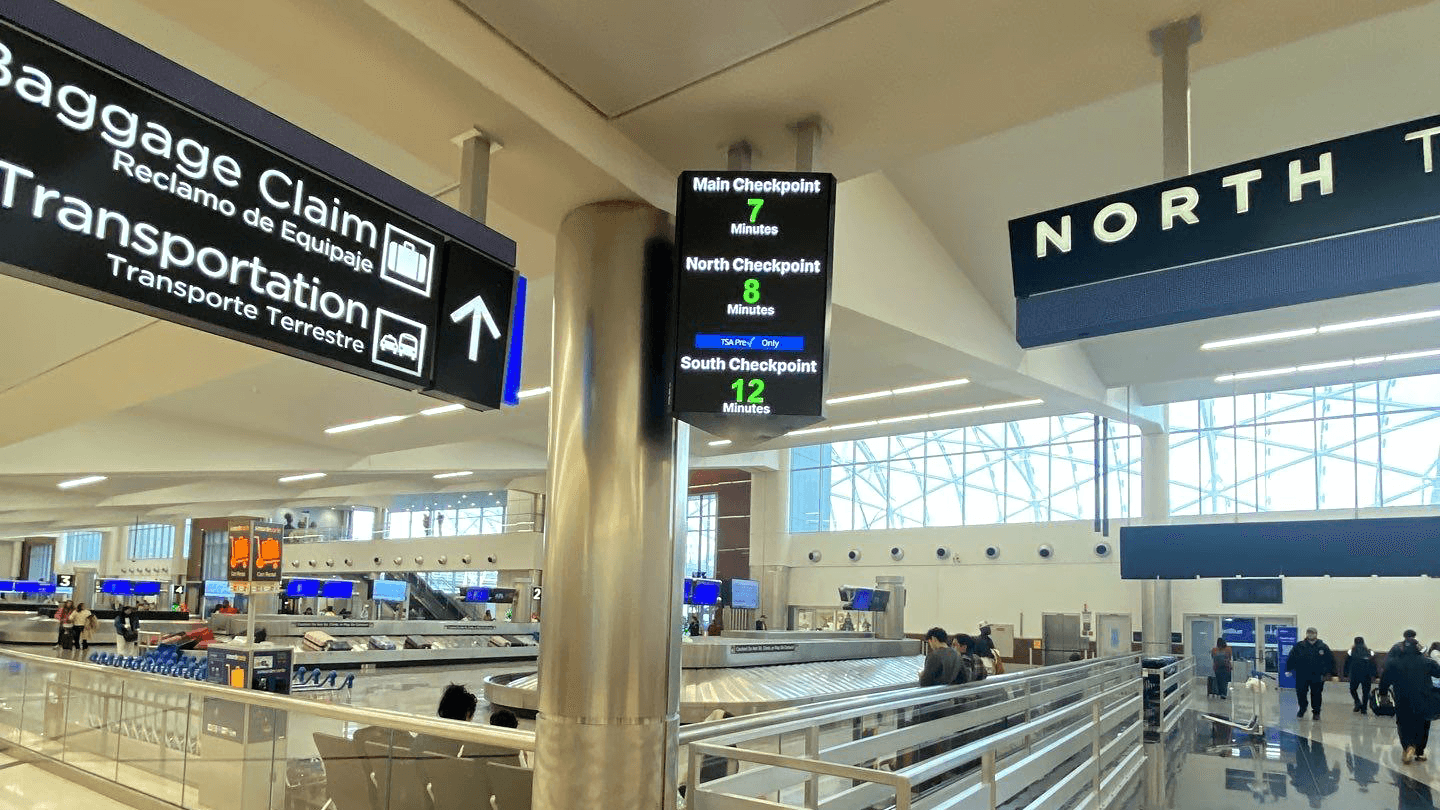
This is exactly how Hartsfield–Jackson Atlanta International Airport have transformed security wait times. Smart queue management communicates to passengers and staff, meaning passengers can make informed decisions about joining security queues, and staff will be alerted when they need to open another security desk.
Conclusion
Connected space infrastructure isn't a new tool category, it's a new way of thinking about how complex spaces are run.
Acquire Digital built this infrastructure from the ground up because we think about the entire space and its future, rather than just solving a specific problem.
As venues take on more touchpoints, more data sources and more partner integrations, the operators who come out ahead won't be the ones with the most software, but the ones whose software actually communicates. Fragmentation isn't solved by buying another point solution to patch the gap; it's solved by building on infrastructure that was designed to connect from day one.
The result isn't just smoother operations behind the scenes. It's every visitor, at every touchpoint, getting the same accurate story about your space, whether they're reading a screen, checking an app, or asking a member of staff. That consistency is what turns a collection of technology into a space that runs like one system.
If you're ready to see what a unified layer could do for your venue, get in touch to talk through what connected space infrastructure looks like for your space specifically.
what's next
Want to know more?
Book a consultation with our experts
By submitting this form you agree to our terms.