

Your Signage Vendor Just Got Sold. Now What?
It rarely makes the local news. A software company changes hands, a new owner sets a new strategy, and somewhere in an airport, a hospital or a stadium, the operations team finds out their digital signage platform is no longer the company they signed up with.
This isn't a hypothetical. It happens across the digital signage industry on a fairly regular cycle: vendors get acquired, priorities shift, and the operator is left holding a contract written for a company that no longer exists in the same form.
If you run a complex environment, it's worth understanding why this keeps happening, and what it says about how you should be buying signage and navigation infrastructure in the first place.
Ownership change is a symptom, not the problem
When a vendor changes hands, three things tend to move at once. The support model changes, because the new owner rationalises teams and pushes customers toward partners rather than direct service. The pricing model changes, typically from a one-off licence toward a recurring subscription. And the product roadmap changes, usually pointed at whatever vertical the new owner cares most about, which is rarely the one you operate in.
None of this makes the software stop working tomorrow. Screens stay on, contracts get honoured. But it does mean the next decision on your calendar arrived earlier than you planned, and it wasn't your decision to make.
The real issue sits underneath the ownership change. Most complex environments didn't choose one platform for their signage, their navigation and their operational data. They chose the best point solution for each problem, one at a time, from whichever vendor won that particular deal. A CMS from one company. Wayfinding from another. Each one a separate contract, a separate support line, a separate roadmap that someone else controls.
That's fine, right up until one of those vendors gets acquired and the ground shifts under a system you depend on.
What operators actually lose when this happens
The visible cost is admin: a new support process, a licensing conversation nobody asked for, a procurement review that wasn't on the calendar. The less visible cost is control. When your signage platform's priorities are set by a company focused on a different sector entirely, you're no longer steering your own roadmap. You're hoping it happens to overlap with yours.
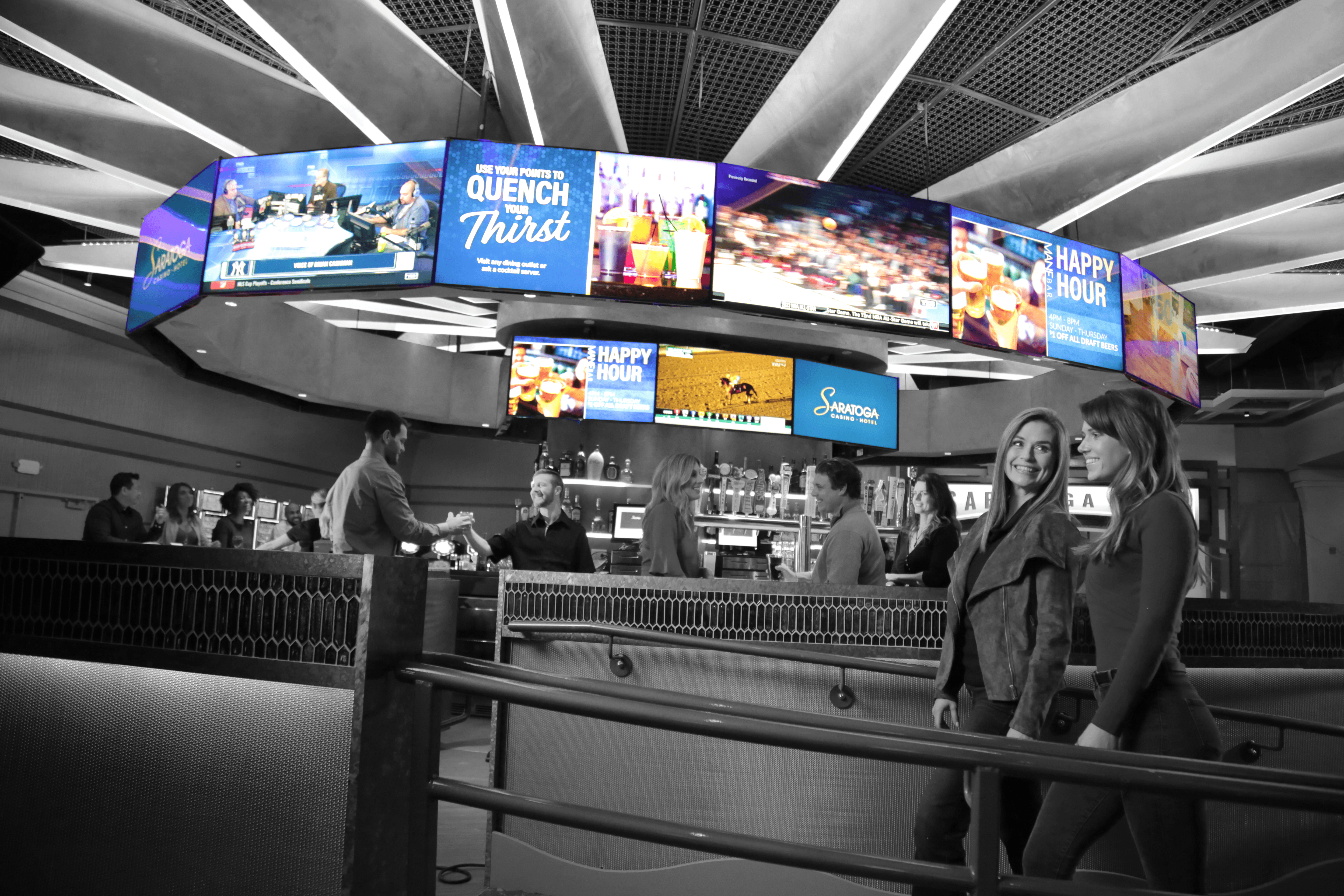
For airports, hospitals, arenas and campuses specifically, this matters more than most sectors realise. These are environments where a screen going dark or a wayfinding system going stale isn't a minor inconvenience, it affects how people move through a building at scale. Infrastructure built for a different kind of buyer, even good infrastructure, wasn't engineered with that pressure in mind.
The fix isn't a better point solution
The instinct after an experience like this is often to shop for a replacement CMS. Same category, different vendor, same exposure the next time an acquisition happens somewhere in the supply chain.
The more durable fix is to stop treating signage and navigation as separate purchases in the first place. When the visual layer and the spatial layer run on one infrastructure, built by one organisation with one roadmap, you're no longer exposed every time a point solution vendor gets bought, restructured or deprioritised. You own the relationship with your own environment, not a piece of it.
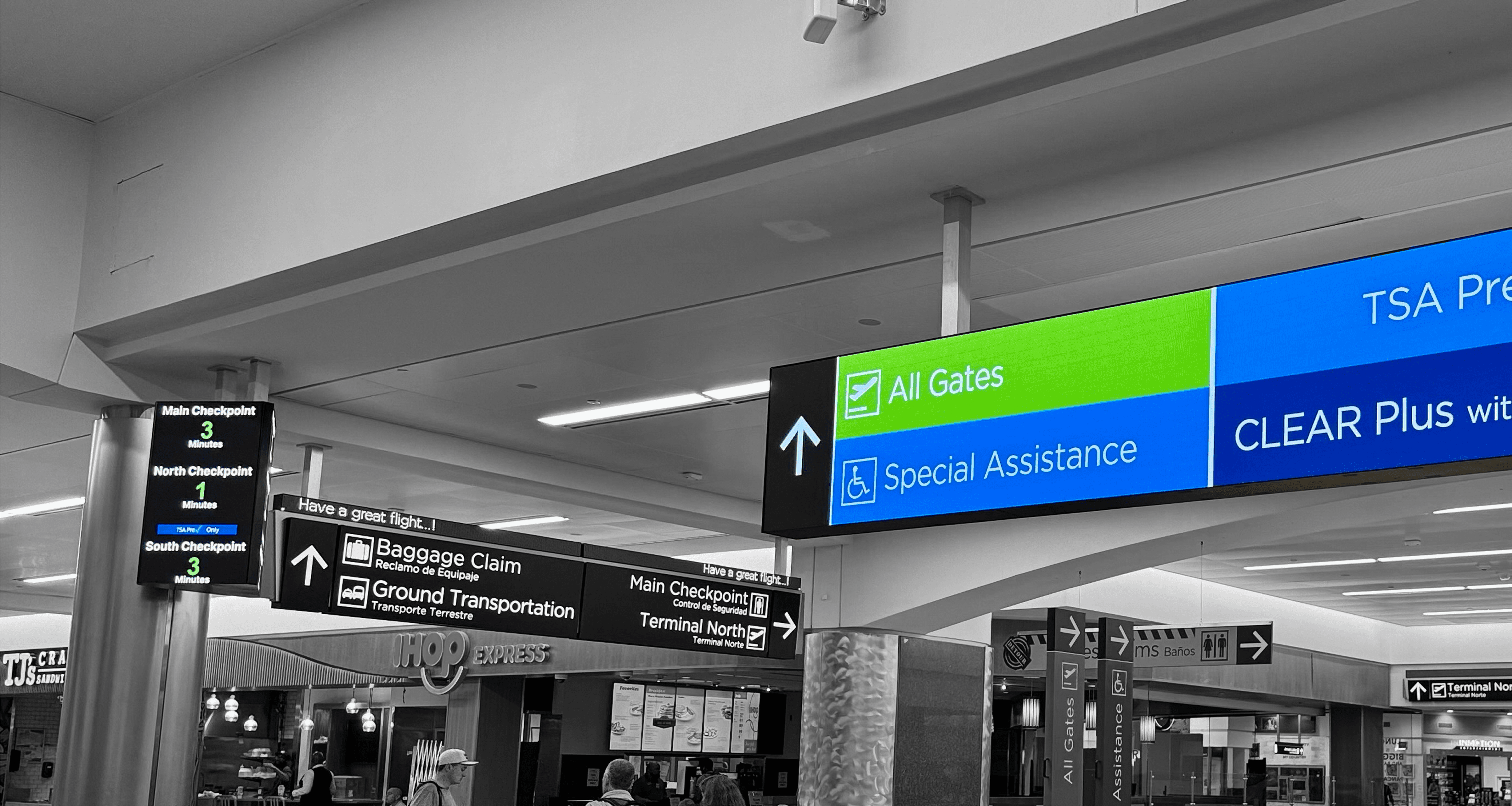
This is the thinking behind Connected Space Infrastructure: a single, unified layer for the visual communications, navigation, operational data and partner integrations that keep a complex environment running, rather than six separate systems held together by six separate contracts.
What to check before your next renewal
A few questions are worth asking regardless of who currently supplies your signage or wayfinding:
If this vendor were acquired tomorrow, how exposed would our operation actually be?
How many separate systems are we running to manage one physical space?
Does our current infrastructure scale with the complexity of our environment, or was it built for a simpler one?
None of these require an emergency decision. But they're worth asking before the decision gets made for you.
If a vendor change has put a signage or navigation decision on your calendar sooner than planned, Acquire Digital works with airports, hospitals, arenas and campuses running Connected Space Infrastructure built specifically for environments where reliability isn't optional. Talk to the team to find out more about how we can help.
what's next
Want to know more?
Book a consultation with our experts
By submitting this form you agree to our terms.