

Air travel is full of pressure for both airports and passengers.
Airports are facing demand to deliver efficient, safe and seamless passenger experiences, all while trying to do more with less. Passengers feel the stress of getting where they need to be on time, spending hours in queues and navigating a complex space.
By gaining control over how information, and passengers, move across your airport, you can improve passenger confidence, reduce operational pressure, and unlock new commercial opportunities.
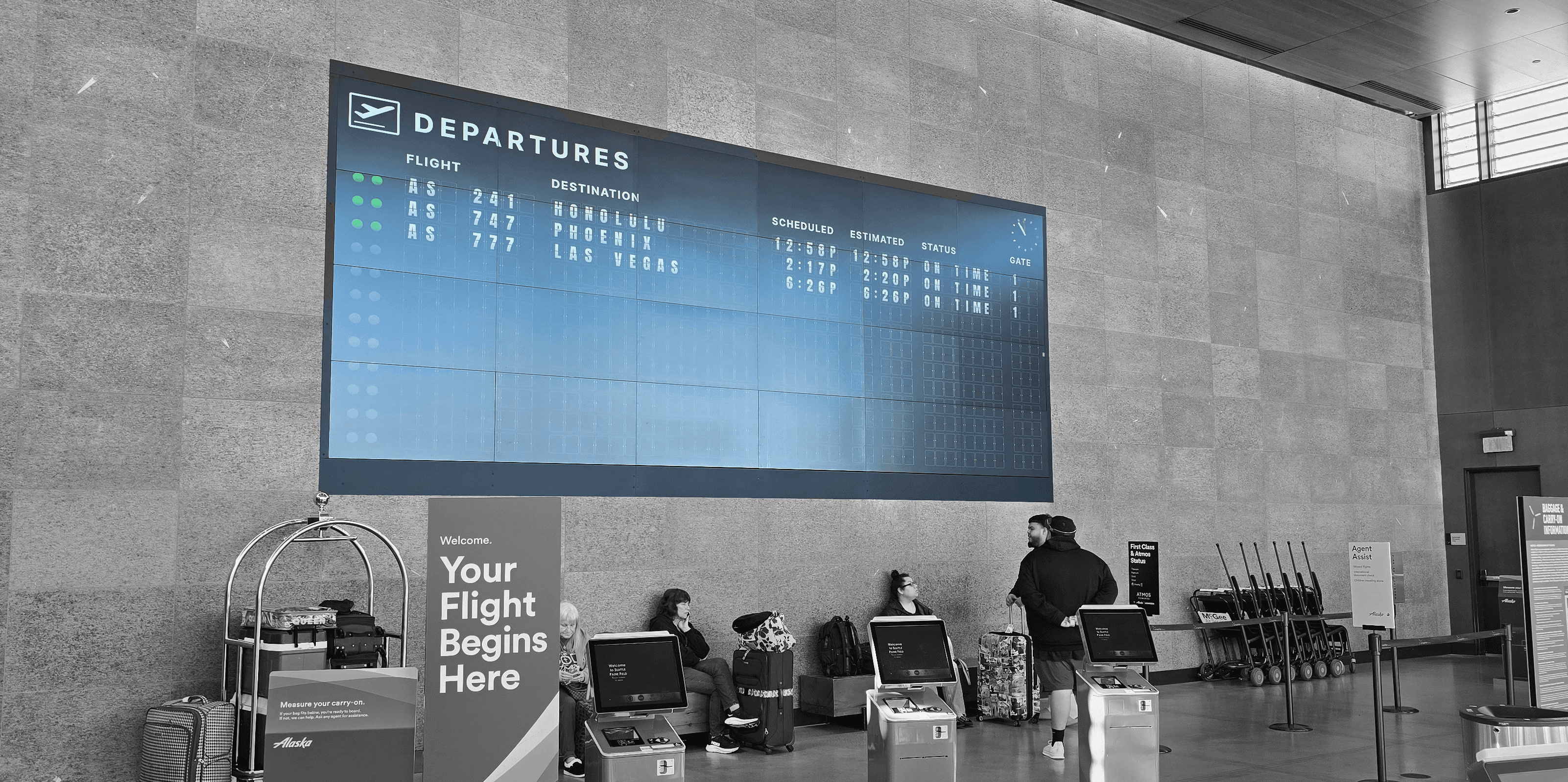
Seamless Passenger Experiences
Improving airport passenger flow and reducing congestion is interlinked with passenger experience and sentiment. Improving passenger flow reduces delays and operational costs, and in turn, reduces passenger stress, which is directly tied to satisfaction scores and revenue.
Airport passenger information systems, such as FIDs, GIDs and BIDs displays, and information kiosks, not only help travellers get the information they need but also support passenger flow management from curb to gate. Instead of static screens, airports need to deliver continuously synchronised passenger information across departures, arrivals, transfer zones, and baggage reclaim areas to keep the flow of passengers moving.
Industry-leading airports are moving towards real-time passenger information ecosystems that support passengers every step of their journey, making flow management easier and more effective, all while improving passenger confidence.
As a result, airports increasingly require instant multi-channel communication to keep passengers informed and operations moving. StudioDX’s fail-safe playback, and ease-of-operation combined with thorough update reports and playback statistics makes it the ideal software for airport passenger information systems.
Be There Every Step of the Passenger Journey
Giving passengers the tools they need to move around your airport independently reduces their stress levels and helps you manage bottlenecks and queue times.
Helping travellers help themselves with airport passenger information systems means less staff interruption and better passenger flow, making it easier to distribute staff to the places that need them.
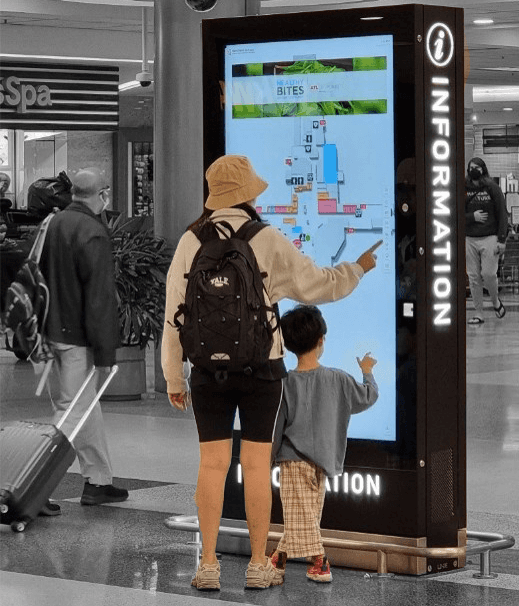
Interactive kiosks are a hugely popular way to offer intuitive, interactive navigation experiences that guide passengers through terminals with clarity and confidence. These kiosks are more than maps, giving you the opportunity to share points of interest, retail and amenities with travellers, increasing non-aeronautic spending.
Interactive kiosks also provide accessible and multilingual options, ensuring every passenger can navigate your airport without barriers.
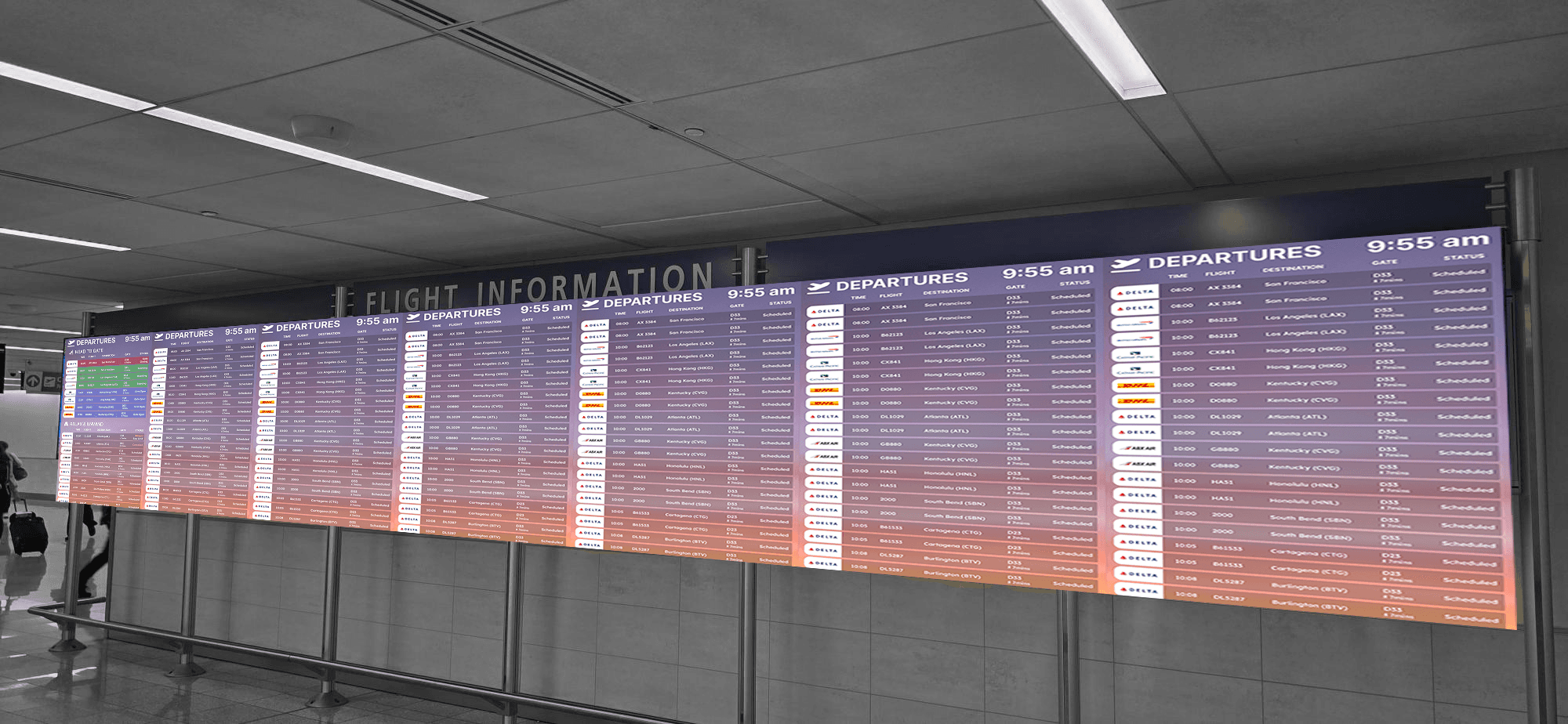
End the Guesswork at Security
Security queues are considered one of the most stressful moments in the airport journey, and one of the biggest operational variables. Real-time security wait data plays a key part in the airport passenger flow management puzzle.
Real-time security wait data isn’t just useful to airport operators, but passengers too. Making it clear which queues are shorter will improve passenger flow, plus shorter queues mean happier passengers, who then spend more time and money airside.
The data you gather helps you make more efficient operational changes on the fly, either manually or through automation based on live conditions, while helping passengers move through security faster.
When passengers understand security wait times, behaviour changes. Flow becomes predictable, pressure on staff decreases, and commercial performance improves.
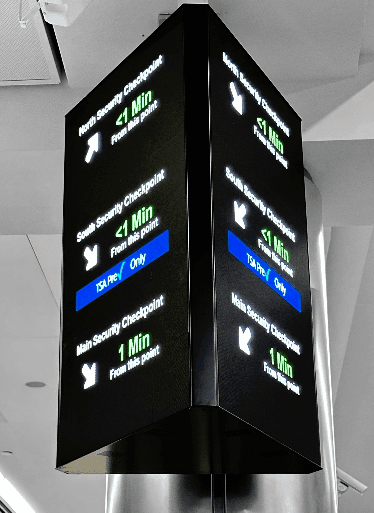
Operationally Aware Signage
Static signs can help passengers get from A to Z, but what about when you want them to visit C, H and Q before they get there?
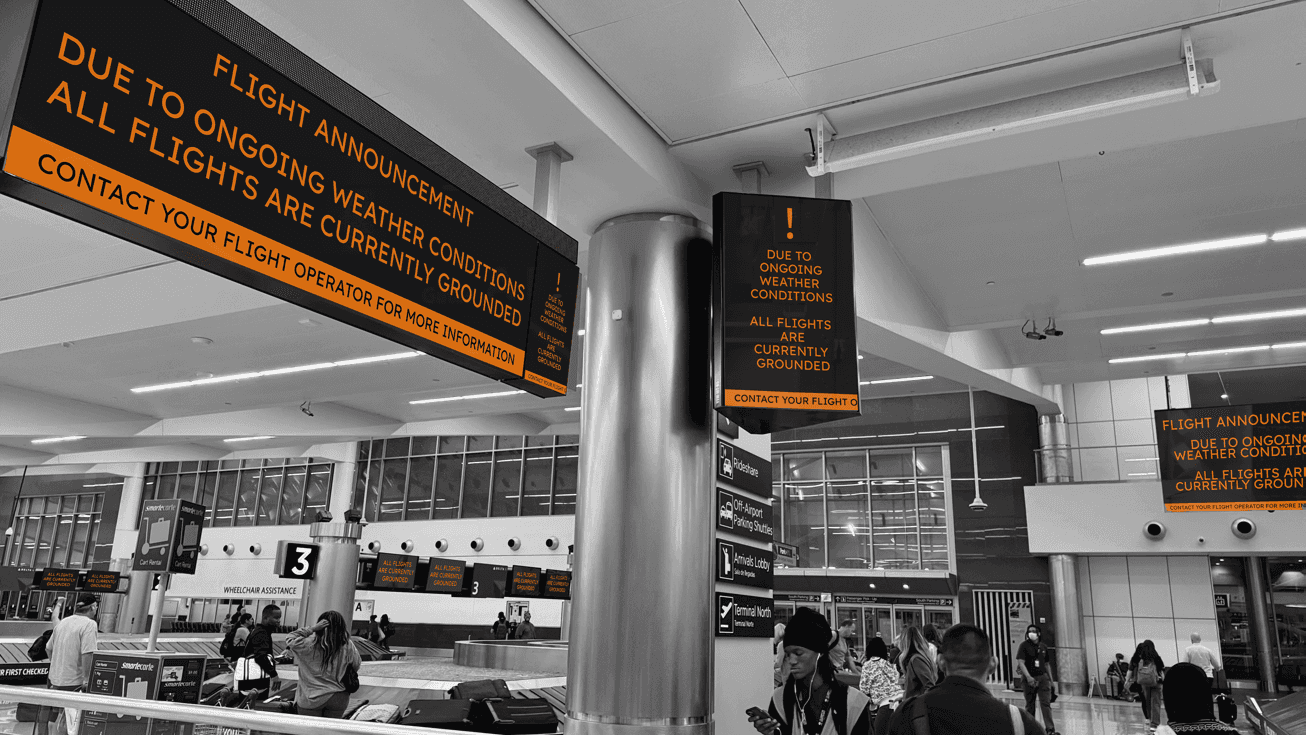
Smart dynamic signage not only helps passengers get to where they need to be but can also be used for operational messaging, including changes to wait times, disruption updates, gate changes, operational alerts, programmatic airport advertising and more, adapting to your airport’s needs.
With automation based on live conditions, you keep passengers moving while providing them with non-aeronautic promotions and information, directing them towards retail and foot outlets.
Passenger Self-Service Automation
Air travel places immense pressure on airports and passengers alike, making efficient, real‑time information essential to keeping people moving with confidence.
By creating a connected passenger information ecosystem with dynamic FIDs, GIDs and BIDs, interactive wayfinding kiosks, operationally aware signage and real‑time security wait data, airports can reduce congestion, ease staff workload and improve both operational performance and passenger satisfaction.
Want to Create a Connected Airport Experience for Your Passengers?
Acquire Solutions form the real-time digital layer connecting airport operations, passenger journeys, and communications across every screen and device. Let’s talk about how we can help you connect, direct, and delight your passengers with a travel experience to remember, from curb to gate.
what's next
Want to know more?
Book a consultation with our experts
By submitting this form you agree to our terms.