

Passengers shouldn’t have to think about how to interact with and get around your airport. Your airport, and its signage, should respond naturally.
Because of this, airport signage can never be one size fits all. This is why smart signage is becoming more popular in airports around the world.
Smart signage goes beyond telling people where they need to go. It can adapt to an individual’s language and specific needs, while helping you directly with airport operations.
What makes smart signage different to digital signage
If you have digital signage installed across your airport already, you might be wondering why that isn’t automatically considered smart signage.
Smart airport signage goes beyond simply uploading new content to your signs. The smart part involves automation, integration with real-time data across your airport. and a huge amount of adaptability.
Automating your content through your airport digital signage platform takes pressure off staff. If your smart signage is integrated with real-time data, you can set certain content to trigger automatically based on different circumstances. For example, if your sensors pick up that one route to a terminal is becoming overcrowded, smart signage will automatically update to send passengers on an alternative, quieter route which will get them to their destination faster while reducing the chance of bottlenecks.
Personalisation is another core element of smart airport signage. You might be wondering how to make signage personal in a busy airport, when there’s lots of different passengers around. Depending on where your signage is located and whether passengers can interact with it increases or decreases the type of personalisation you can use, but all signs can be personalised to some level.
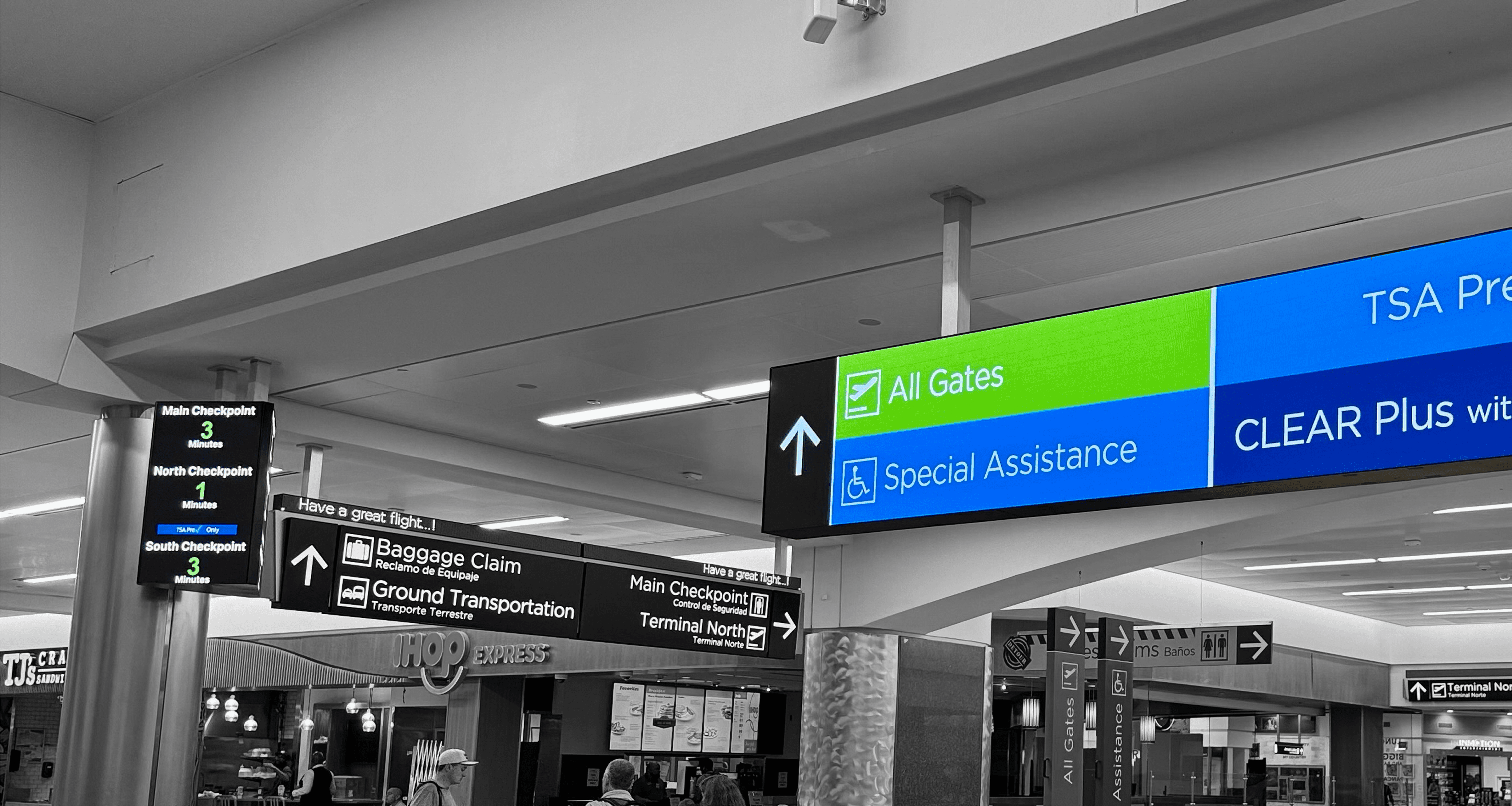
For example, let’s say you have a flight arriving from a mainly Spanish-speaking country. If you know those passengers are likely to be taking a specific route out of your airport, you can ensure key signs are written in both your country’s language and Spanish for a certain period, triggered automatically by incoming flight data.
Interactive wayfinders, kiosks, and mobile and web integration allow you to give individual passengers a more personalised experience. Either by logging into their account or sharing their boarding pass info, passengers can get a more personal experience based on their past travel data and their destination. This could be informing them of the best route to their gate, accounting for security and luggage drop off wait times while making sure they can eat and shop before their flight if time allows.
Smart airport signage isn’t just about what’s displayed. It’s about when, where, and why specific content is shown. By combining real-time data, automation, and personalised experiences, you transform signage from static information points into a dynamic system that actively improves passenger flow, reduces stress, and enhances every journey through your airport.
Why airport signage can never be one size fits all
Airports bring people together from around the world, literally.
Some visitors are frequent flyers, some are flying for the first time. Some are there with their families, others are solo travellers. Some passengers have more accessibility needs than others and may have to navigate your airport differently. Others speak a different language to most of your airport.
This is just a short list of the types of people who will visit your airport, all with different needs and requirements. And, we haven’t even started on the people who use your airport who aren’t passengers, like people picking up arrivals, airport and airline employees, external contractors and emergency services.
Your airport digital signage platform should allow you to cater for a variety of situations and visitors. While it’s nearly impossible to adjust smart airport signage to every person in your airport, you can ensure you have content ready for a wide variety of visitors, especially those using interactive kiosks where they can have an even more tailored experience.
While creating content for your smart airport signage, you need to consider many different audiences, travellers and non-travellers, and consider which digital signage they’ll be using most often. As mentioned before, you have more flexibility with interactive kiosks as they offer a more personalised experience, but you may also consider the signage around those kiosks.
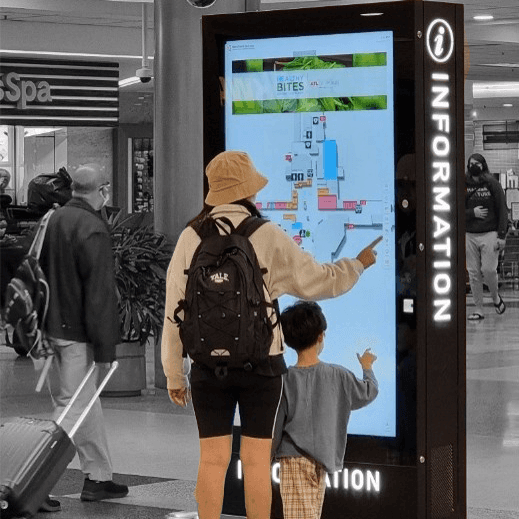
For example, if you have interactive kiosks in arrivals, you may also need to add signage inviting those with pick up duties to use them. If they’re new to airports, they may not realise the kiosks will also help them at pick up.
Different areas of your airport have different signage needs too. The information you share on car park signage needs to be efficient and to the point, whereas an interactive kiosk gives you the opportunity to share much more information.
Effective airport signage isn’t about covering every scenario. It’s about being flexible enough to meet people where they are. By designing with different audiences, locations, and needs in mind, you create a smarter system that guides everyone more clearly, reduces confusion, and keeps your airport moving smoothly no matter who’s passing through.
Operational Efficiency and Real-Time Decision Making
Airport digital signage platforms improve operational efficiency for airports just like yours. As an airport digital experience partner to many airports, including Philadelphia International Airport, Hartsfield–Jackson Atlanta International Airport, LaGuardia Airport and more, we’ve seen the impact that powerful airport digital signage platform can have on operational efficiency.
Smart airport signage reduces travel anxiety and gives passengers more autonomy, allowing staff to focus elsewhere. It also helps reduce bottlenecks of confused travellers who aren’t sure where to go next.
You’ll be able to automatically or manually, depending on the situation, adjust smart signage to manage crowds and potentially avoid a crowd building in the first place. This can be done by automating signage to change at peak times, or to react based on real-time data.
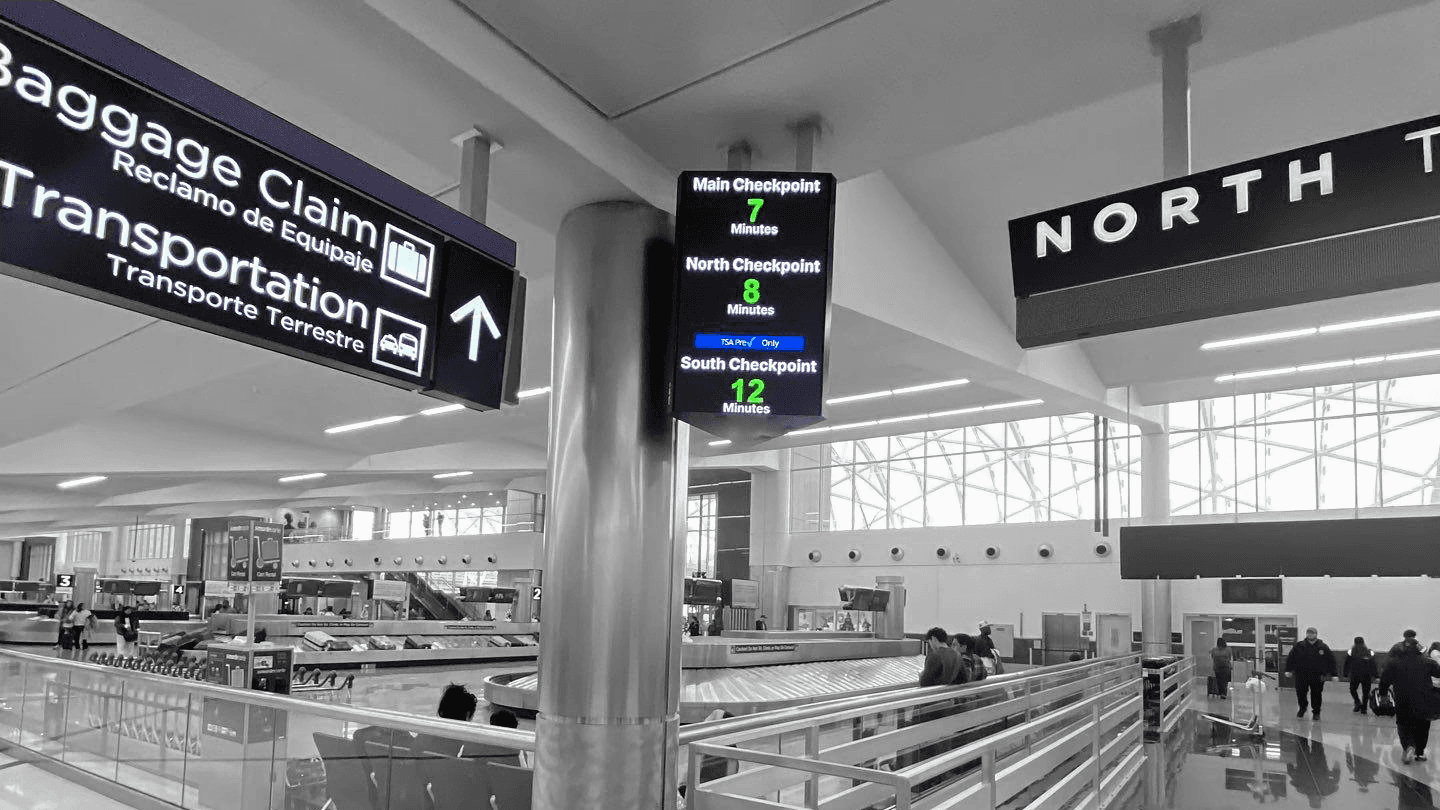
Real-time data can help you optimise queues across your airport. For example, real-time tracking and data can alert the relevant team when queues are backing up at security, so you can open additional security queues. When this happens, your airport digital signage platform will adjust to alert passengers new security queues have opened and that if they move now, they’ll have a shorter wait time.
Smart airport signage is also crucial for emergency communications. Urgent messaging can be sent you certain signs in your airport, or across your entire airport depending on the situation. Passengers and staff alike aren’t always sure what to do in emergency situations, so clear signage combined with audio instructions is a great way to get them to act.
Smarter Signage Means Smarter Promotion
A good airport digital signage platform should be able to integrate with various areas of your operations, including security, your retail outlets, the airlines flying from your airport and more.
For many of the areas of your airport, being able to use digital signage for promotion alongside navigational signage. Interactive kiosks are an ideal space for promotion when they’re not being used. They can feature adverts from around your airport while in use, as long as they’re not too invasive.
Earlier, we discussed how there are lots of different visitors to your airport, who will be looking for different amenities. For passengers who scan their boarding passes at kiosks you may be able to show them targeted promotions based on the information you know about them.
For example, a parent travelling with their family scans their boarding pass at a kiosk. You can see from their booking that they are travelling with three children. When they navigate to food outlet options on your kiosk, you can make recommendations for restaurants that cater especially well for children.
This type of promotion benefits the passenger as well as benefiting your airport. By putting the passenger first, rather than showing them generic promotions, will get you a much better ROI.
Smarter Signage, More Human Journeys
Smart airport signage isn’t just an upgrade to your current screens, it’s a shift in how your airport communicates, operates, and supports every person moving through it.
By combining flexibility, real-time data, and thoughtful personalisation, you’re not only making journeys easier for passengers, you’re building a more efficient, responsive airport behind the scenes.
Because when signage works the way it should, passengers don’t notice it. They just move through your airport quickly, confidently, and without hesitation.
Want to Create a Connected Airport Experience for Your Passengers?
Acquire Solutions form the real-time digital layer connecting airport operations, passenger journeys, and communications across every screen and device. Let’s talk about how we can help you connect, direct, and delight your passengers with a travel experience to remember, from curb to gate.
what's next
Want to know more?
Book a consultation with our experts
By submitting this form you agree to our terms.