

Key Takeaways
Navigation drives discovery, and discovery drives spend. Guests who can't find amenities stick to what's familiar, missing out on dining, shows, and other activities they would have enjoyed.
Modern wayfinding is smart and adaptive. It updates in real time (e.g. rerouting after a cancelled show) and stays consistent across kiosks, mobile and web.
It's revenue infrastructure, not just signage. Confident navigation boosts guest spend and satisfaction while giving ops teams centralised control and analytics.
Inspire Guests to Explore
Casino resorts have unique navigational challenges. You're combining hotels, restaurants, spas, entertainment venues, and convention spaces all under one roof. You don't just have the navigation challenges of a casino, but multiple entertainment and hospitality venues combined.
When guests can't find their way, they don't explore. They stick with what's familiar, even when there are plenty of options around the resort they'll enjoy. Good navigation isn't just about getting guests to where they want to go. It should also be influential in helping them find new experiences that keep them coming back to your resort time and time again.
Why Casino Navigation Is Uniquely Difficult
Casinos are designed to keep guests on site, and casino resorts are no different. This can be good for short-term revenue, but if guests have a frustrating time getting around your casino resort, they're less likely to return. Plus, if they're casino regulars but this is their first time at a resort, you want to show them everything your resort has on offer, so they get the full resort experience rather than the same casino visit they're used to.
Without powerful resort navigation systems, guests can face decision fatigue before they even start exploring. They're navigating convention centres, pools, spas, multiple food and beverage outlets, and entertainment venues alongside the casino floor and hotel.
This is before we even consider the diverse range of guests that will visit your resort, such as international visitors, guests who speak different languages, first-timers, and those with accessibility needs. Static signage isn't going to cut it in a space like this.
Your floor and front desk staff are constantly fielding "where is…?" questions instead of focusing on guest experience and creating wow moments. Verbal directions from staff only go so far in a space this vast. What happens when a guest gets halfway to their destination but can't remember the next step?
Static signage hasn't kept pace with how resorts have grown, meaning many are relying on a legacy solution for a modern problem. What's needed is connected space infrastructure that can get guests to where they want to go, and help them discover new experiences across your casino resort as a result.
The Link Between Navigation and Revenue
Discovery drives spend, and guests can't spend money at areas of your casino resort they can't find, or don't know about.
Here's an example. A guest heads back to their room after dinner because they didn't realise the comedy club was a 3-minute walk away, so they took the easy option. That's a missed food and beverage order, a missed ticket sale, and missed gaming time if they decided to extend their night past the comedy club.
Missing out on these things reduces the guest's dwell time. Yes, they're still on property, but they're unlikely to be having a great experience in their hotel room compared to exploring more of your resort. The longer they stay engaged on property, the higher their spend per visit.
A guest who can confidently navigate your resort will spend more overall. For example, on their way to a restaurant, a group of guests visit an interactive casino kiosk to see what other activities are available once they've finished eating.
They're a party of four, so they filter the options on the kiosk to find activities suitable for four people, rather than having to guess which activities have space for them. They book the experience right there, so they can go straight from the restaurant to the activity. They have a fantastic time, staying out later than they would have if they'd become frustrated trying to guess which activities had space for four in a busy casino.
After breakfast the next morning they visit a kiosk again and, thanks to content scheduling, they're greeted with a pop-up promotion for the spa. The group are tired from a late evening and were just going to head back to the hotel for a nap. They'd never considered taking time to recharge at the spa. So that's four spa bookings, as opposed to four napping guests.
This is a great example of how introducing guests to new activities through connected space infrastructure, like wayfinding, can lead to both an increase in spend and an increase in customer satisfaction scores. The guests probably would have still been happy heading for a rest at the hotel, but this elevates their experience while increasing spend.
What Modern Resort Navigation Systems Look Like
Navigation in casino resorts goes beyond digital signage and interactive casino kiosks. Your resort navigation systems need to get people to where they want or need to go, but also need to introduce them to more places they want to go. This guidance should extend to their mobile devices too, so they can plan from their hotel room or on their journey to your resort.
Your casino wayfinding software needs to be smart. It needs to adapt to the time of day, ongoing promotions, and route changes or traffic build-up around your casino.
For example, a show is cancelled last minute. You now have a crowd of guests either in the show space or heading to it. Your smart digital wayfinding and signage technology can put out messaging to inform people that the event is cancelled and promote other entertainment options nearby. Smart signage allows you to put this message out only where it matters: around the theatre, along common routes guests take to get there, and via mobile notifications if they're using your app. This stops unnecessary noise on signage or kiosks that are unlikely to be seen by guests who have tickets to the show, meaning they can keep running their usual promotions and navigational information.
So, how does connected space infrastructure look in your casino? This isn't a "you are here" map-style navigation. We're talking about an active navigation layer across your entire property, taking both the spatial and visual layer into account.
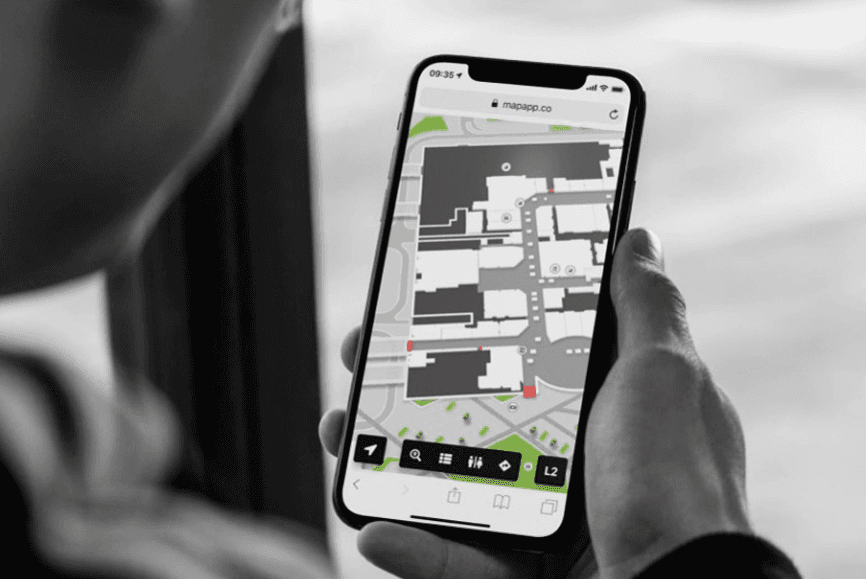
The spatial layer of your connected space infrastructure usually takes the form of touch-screen interactive casino kiosks placed at high-traffic decision points. Good casino wayfinding software will allow you to replicate the exact same map on your website and mobile, meaning guests can continue their journey on their own device after starting at a kiosk, or by accessing the map from their device.
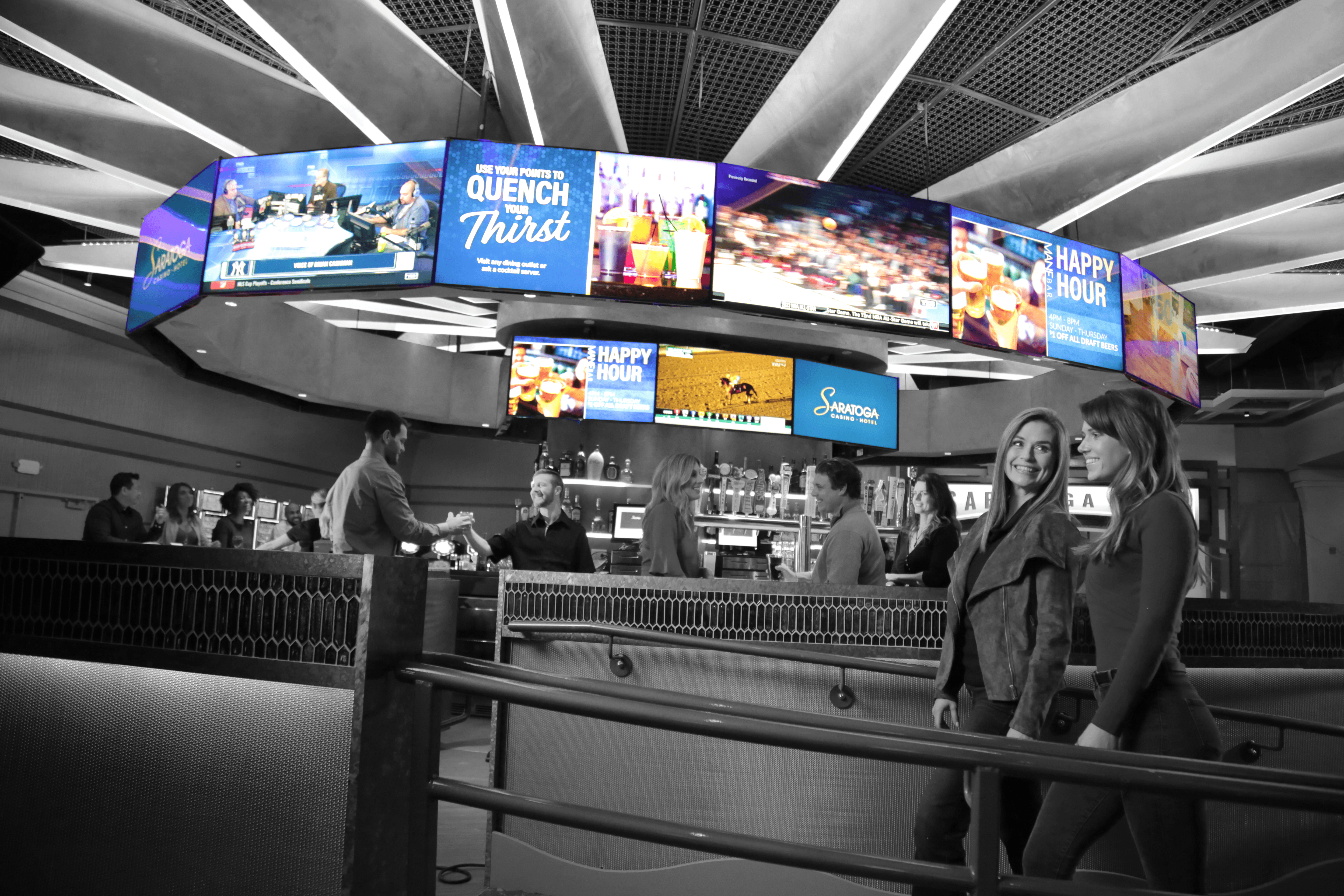
The visual layer of your connected space infrastructure is made up of live-updating smart digital signage that can promote an event starting soon, highlight a quiet restaurant nearby, or redirect guests around a maintenance closure or cancellation.
Connected space infrastructure should always have accessibility at its heart, no matter the location. This includes multilingual support for guests visiting your casino resort from abroad, ADA-compliant interfaces, and step-free route options.
What Good Casino Wayfinding Software Actually Does
Your casino wayfinding software gets people from A to B, but also helps them find new experiences they may have missed without access to an intuitive wayfinding kiosk. Good wayfinding software also has options to run adverts while kiosks aren't being used, adding an extra revenue stream to your casino resort.
Your software should allow for both scheduled and real-time updates. Interactive casino kiosks and smart digital signage can make relevant suggestions based on time of day, guest location on the property, or live event schedules. Automated updates are great, but there may be times where you need to manually push content out, for example if an event is cancelled or a route is closed. Good connected space infrastructure software will make that "manual" process less manual, which means you can update multiple screens with just one button.
Ideally, your casino wayfinding software and digital signage software should connect, so that you get consistent updates across both platforms. Your ops teams can update maps, promotions, and event info from a central platform without touching individual screens or kiosks.
Great casino wayfinding software will also have solid integration with your existing resort systems. This makes it quicker and easier to pull through data from event schedules, restaurant reservation availability, show times, and more, meaning your wayfinding content stays accurate without manual upkeep.
Analytics are also crucial. You'll be able to get more information about foot traffic, popular routes, and underperforming areas of the property. If certain kiosks aren't getting much use, you'll be able to make the informed decision to move them.
Finally, scalability is another important aspect to consider. You want your connected spaces infrastructure to grow and adapt with your casino when needed.
The right casino wayfinding software doesn't just help guests navigate. It gives your ops team the control, automation, and insight to keep the entire resort experience running smoothly, without adding to their workload.
Casino Wayfinding Is a Revenue Investment, Not a Signage Upgrade
Wayfinding is a revenue infrastructure investment, not a signage and kiosk upgrade. It's not a rip-and-replace project either. Good casino wayfinding software will integrate with your existing technology and enhance it.
The resort experience you've built is only as valuable as your guests' ability to find their way around it. A guest who navigates with confidence is a guest who explores, discovers, and spends. As a result, you're improving guest satisfaction, staff efficiency, and commercial discovery.
At Acquire Digital, we consider your entire connected space infrastructure. Our wayfinders are more than maps. They actively enrich visits with real-time information, inclusive experiences, and contextual storytelling that adapts to every type of visitor.
Let's talk about how our connected casino infrastructure options can help you connect, direct, and delight every guest at your casino resort.
what's next
Want to know more?
Book a consultation with our experts
By submitting this form you agree to our terms.