

A gate screen has one job most of the time: tell passengers when to board. It is also, for the twenty or thirty minutes most passengers spend in front of it, the single largest piece of real estate an airline or airport has to make that wait feel like something other than dead time, and most gate screens do almost nothing with that opportunity.
Smart GIDS, short for gate information display systems, treats that waiting time as an opportunity rather than dead air, using the same connected infrastructure already running the rest of the terminal.
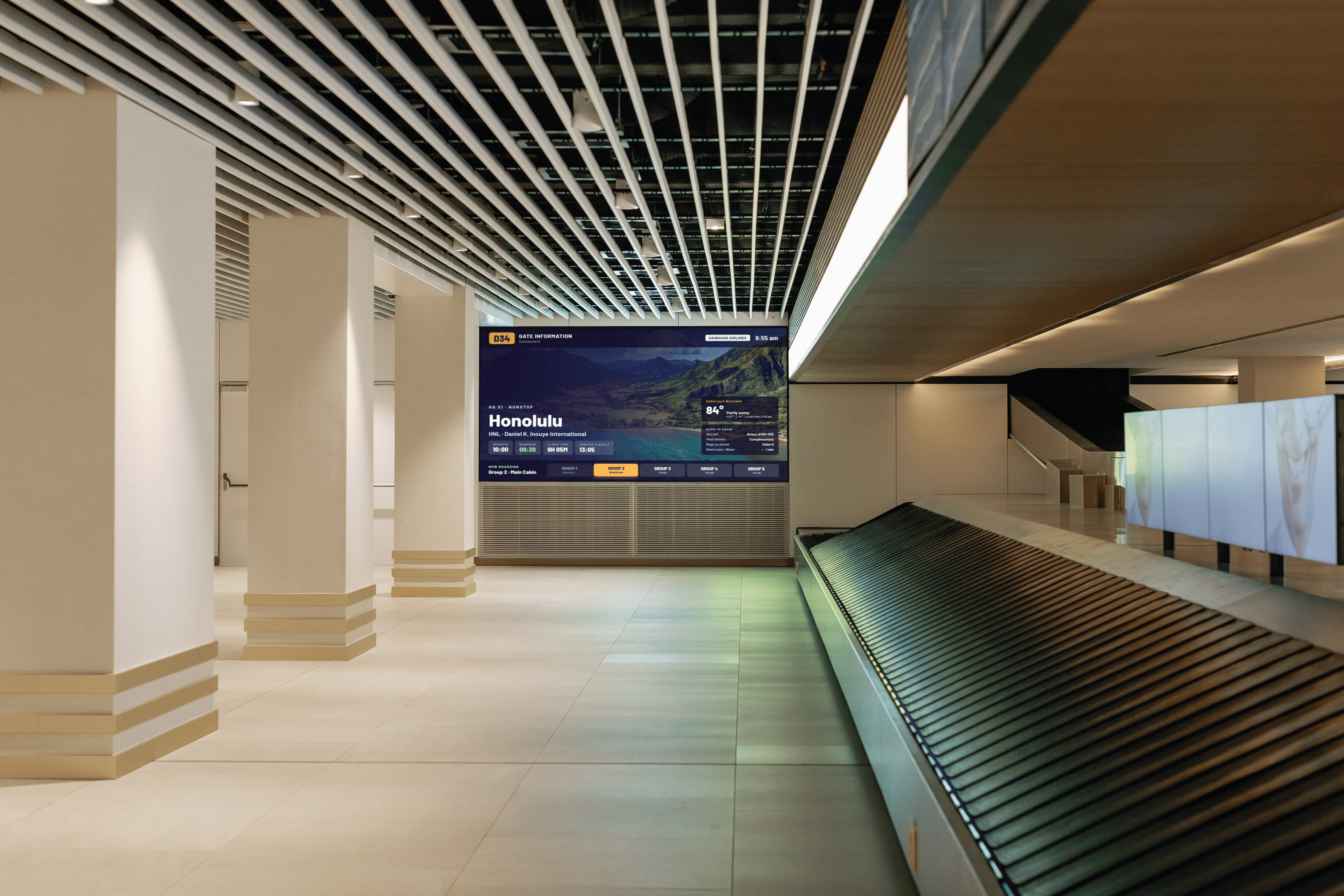
Boarding status, layered with destination
A smart gate information display layers live boarding status, groups, times, now-boarding, over full-bleed destination imagery, local weather and time at the destination, and the practical details passengers actually ask gate agents about: aircraft type, meal service, and where to find bag claim on arrival. Airline brand theming carries through automatically, so the screen still feels like it belongs to the operating carrier even though it runs on shared infrastructure.
None of these elements are decorative extras. Each answers a question a gate agent would otherwise field in person, multiplied across every passenger waiting at that gate, which is the difference between a screen that entertains and one that genuinely reduces staff workload.
Destination imagery also does quiet commercial work of its own. A gate screen that shows a passenger a striking image of where they are headed, rather than a plain boarding countdown on a blank background, is a small but consistent brand impression for the airline and the destination alike, repeated across every gate in the terminal, every day.
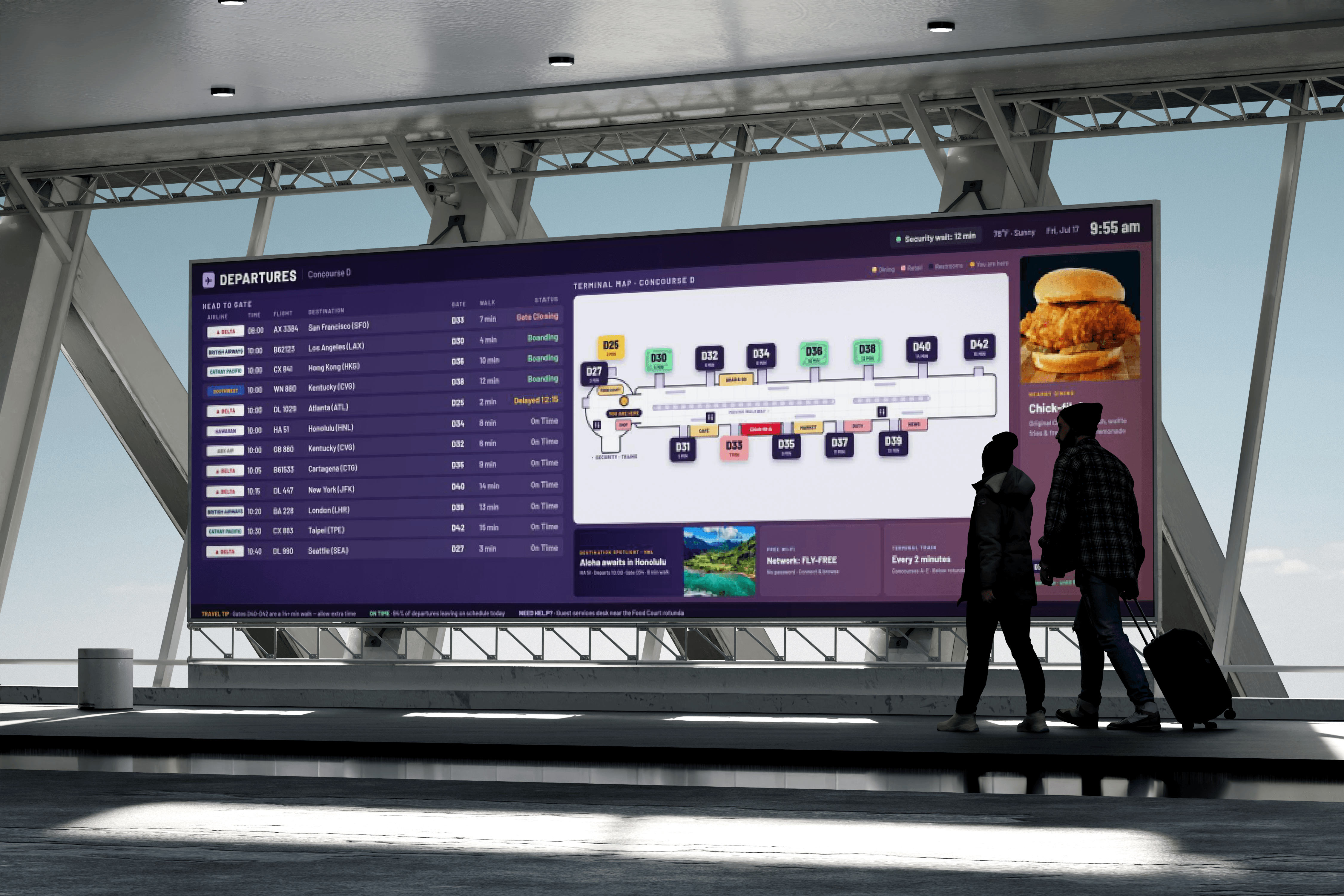
The same data, a different template
None of this requires a separate data feed from the flight information displays elsewhere in the terminal. A gate screen and a departures board both read from the same underlying flight data, composed into different templates for different moments in the passenger journey, which is exactly the model running today at Hartsfield-Jackson Atlanta International.
That shared data source is also what keeps a gate screen accurate during disruption. A delay or gate change updates once, at the platform level, and reaches the gate screen at the same moment it reaches every other display already showing that flight, without a separate manual update at the gate itself.
From functional screen to moment of anticipation
The commercial and experience case for this is straightforward: a gate screen that only shows a boarding countdown is functional and forgettable. One that shows a passenger their destination, layered with the practical information they need, turns a wait into anticipation, and gate agents field fewer repeat questions in the process.
For airlines, this is also a branding opportunity that costs nothing extra to build: the same infrastructure that carries the airport's operational data can carry an individual airline's visual identity at that specific gate, without a bespoke build for each carrier.
Reducing the load on gate agents
Gate agents spend a meaningful share of the boarding process answering the same handful of questions from different passengers: is this the right gate, has boarding started, where does this flight go? A gate screen that already answers those questions visibly, and updates the moment anything changes, measurably reduces how often an agent is interrupted to repeat information that is already on display.
That is a genuine staffing benefit, not just a passenger experience one, and it comes from the same connected infrastructure investment an airport has likely already made elsewhere in the terminal, rather than requiring a separate gate-specific system.
Conclusion
The gate is the last impression a terminal makes before a passenger boards. A connected infrastructure means that impression is built from the same reliable data as everything else they have already seen on their journey through the terminal.
See how gate screens fit into a wider connected passenger experience. Get in touch to talk it through.
what's next
Want to know more?
Book a consultation with our experts
By submitting this form you agree to our terms.