

Key Takeaways
Real-time navigation handles complexity. Interactive wayfinders adapt to gate changes, closures, and delays, guiding passengers through multi-level, multi-modal hubs.
Accessibility and multilingual support are essential. Screen readers, voice guidance, and clear iconography ensure every traveller can navigate independently and confidently.
Live data integration makes signage a smart companion. Connecting to flight and transit feeds turns simple directions into context-aware guidance, easing pressure on ground staff.
Supporting Every Passenger's Journey
Airports, train stations, and transit hubs are high-pressure environments. Time is tight, passengers are often disoriented, and the stakes - missed flights, wrong terminals, and disrupted journeys, are far greater than a typical wayfinding scenario. In these spaces, signage needs to do more than provide directions. It needs to anticipate needs, adapt to constant changes, and support every passenger’s journey, no matter their language, ability, or urgency.
That’s where interactive digital wayfinding steps in; not just as a helpful tool, but as a critical layer of operational efficiency, accessibility, and experience.

Making Complexity Feel Simple
Modern transport hubs are multi-level, multi-modal beasts. You're not just navigating one building; you're moving between concourses, check-in zones, security areas, food courts, lounges, and gates, all while dragging luggage or wrangling a family. A traditional static map can’t keep up.
Interactive wayfinders offer real-time, personalised navigation. Passengers can search by airline, destination, or service, unlocking the ability to then follow a step-by-step route that updates based on location, time, and terminal layout. And because the directions are dynamic, they account for live conditions like gate changes, closed escalators, or security delays.
Language Shouldn’t Be a Barrier
Transport hubs are global spaces. A passenger might have just landed from Tokyo, or be en route to Madrid. Navigating in a second language adds friction and stress.
Digital airport wayfinding solves this with multilingual interfaces and simple iconography. Whether through touchscreens or mobile handoff, passengers get clear, culturally neutral directions in a format they understand. That makes for smoother journeys, better flow, and fewer staff interruptions at help desks.
Emergency-Ready, Always
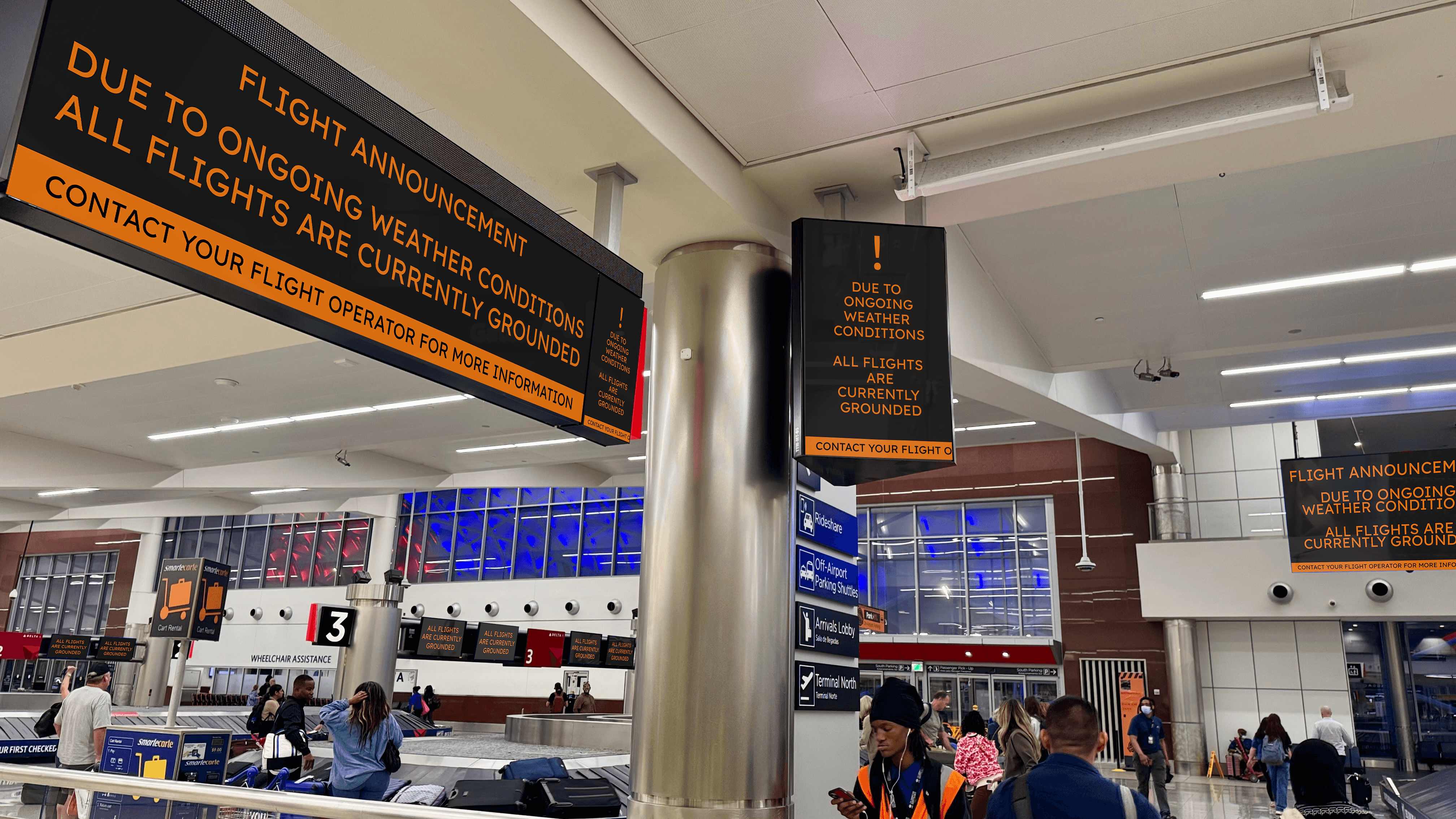
Safety isn’t optional in transport environments. When a critical event happens; whether it’s a fire alarm, power outage, or a need to evacuate certain zones, signage must respond instantly.
Digital wayfinders can switch modes in an instant, overriding regular navigation with emergency messaging, safe exit routes, or transport updates. It ensures passengers are guided away from danger with clarity and calm, no matter their language or familiarity with the space.
This is where integration with systems like Beacon becomes powerful - allowing dynamic, real-time control across all kiosks and screens, not just passive displays.
Accessible for All Travellers
Transport hubs serve everyone: solo business travellers, families with buggies, elderly passengers, people with hearing or visual impairments, and those navigating in unfamiliar languages. So accessibility can’t be bolted on, it has to be baked into the experience.
Today’s best digital wayfinding solutions are built with inclusivity at their core. That means supporting screen readers for those with visual impairments, offering high-contrast modes for better visibility, and providing voice-guided navigation for travellers who prefer auditory cues. Routes can be filtered by preference too, such as prioritising elevators over escalators for those with mobility needs.
Touchless interaction, larger touch targets, and interface simplification all play a role in making sure no one is excluded from accessing information or navigating a space independently. It’s not just about compliance, it’s about confidence and dignity for every passenger.
Integrated with Flight Data, Transit Feeds & More
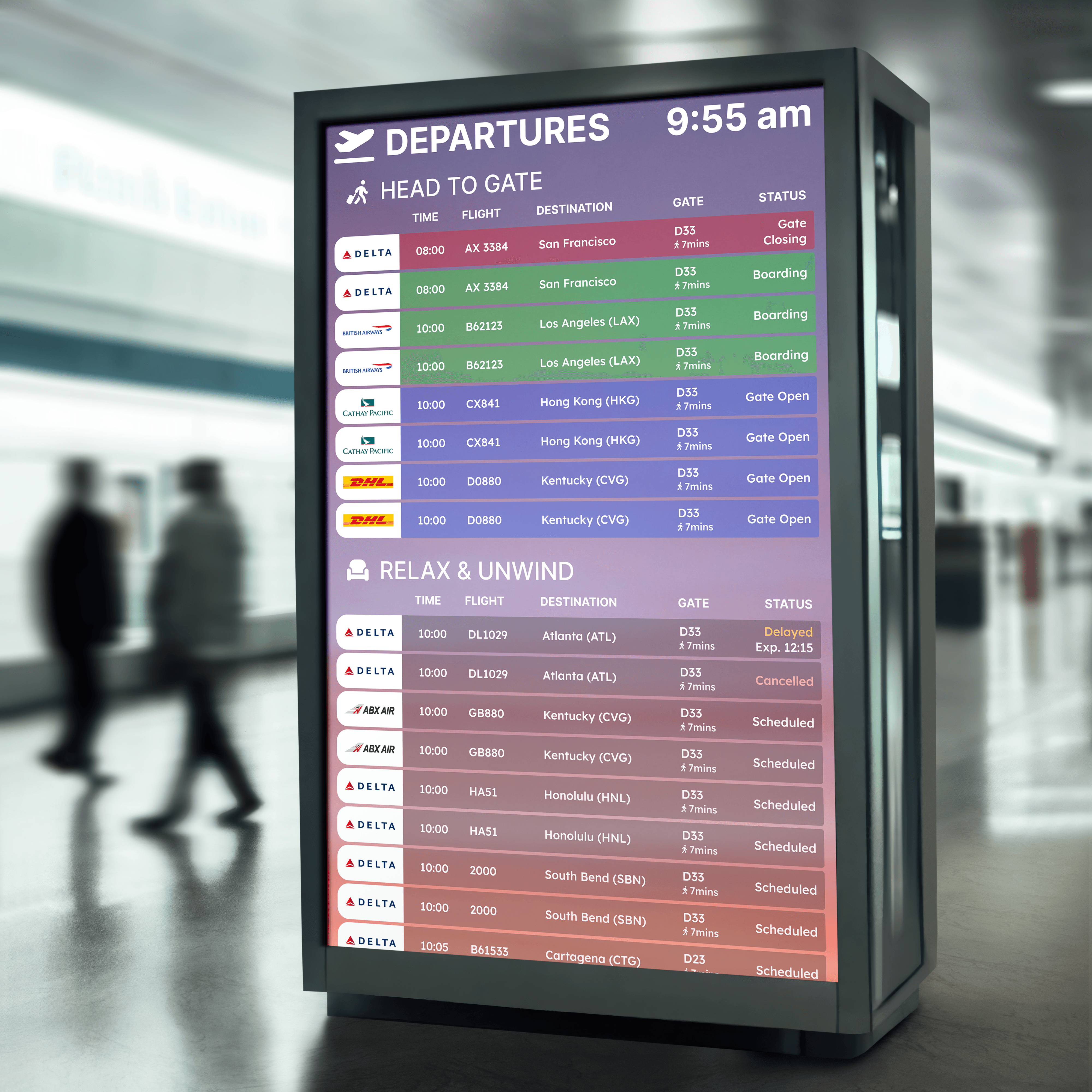
A map is useful. But a map that understands your context - that knows your flight is delayed, your gate has changed, or your train is about to depart - is transformative.
The best interactive wayfinders don’t work in isolation. They connect to real-time feeds from Flight Information Display Systems (FIDS), public transport networks, and even retail systems to create an intelligent, responsive experience. A passenger looking for their gate isn’t just shown directions, they’re guided based on live status updates, with alerts about any last-minute changes. If there’s time for a coffee or a nearby charging station en route, the system can recommend that too.
This level of integration turns a simple screen into a smart travel companion. It reduces uncertainty, increases passenger satisfaction, and lightens the load on ground staff who would otherwise be fielding the same questions hundreds of times a day.
Ready to improve passenger flow and experience at your airport or station?
Let’s talk about how Wayfinder helps operators stay in control, while giving travellers the confidence to move freely.
what's next
Want to know more?
Book a consultation with our experts
By submitting this form you agree to our terms.