
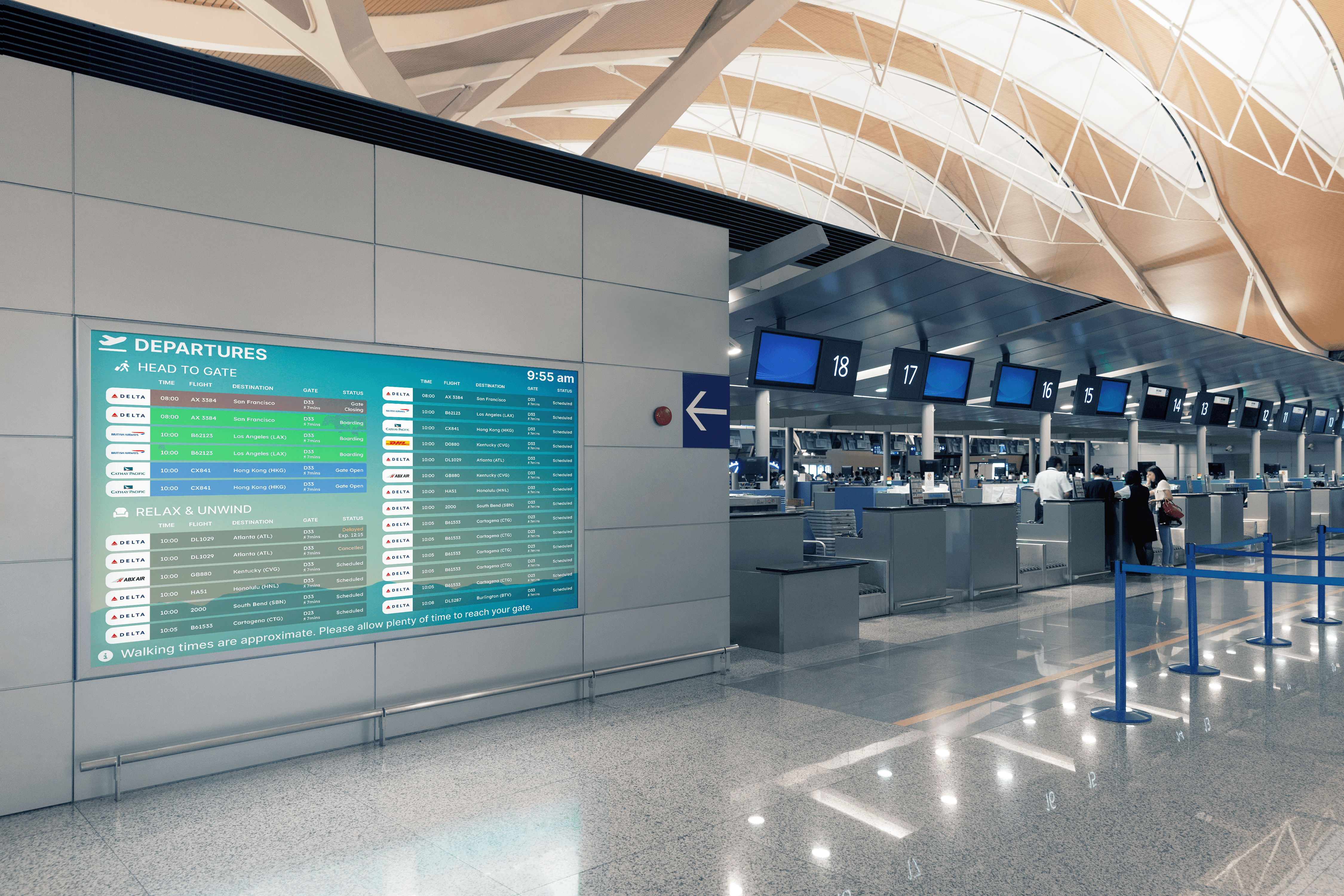
A traditional flight information display answers one question: when does my flight leave? That was enough when a departures board was a static list refreshed on its own schedule. It is not enough for a passenger standing in a terminal with a connecting flight, an unfamiliar gate, and a phone battery at nine per cent, who needs to know not just when their flight leaves but whether they can still make it there in time.
Smart FIDS, short for flight information display systems, is the term for what happens when a departures board stops being a passive list and starts being an active part of the terminal's connected infrastructure, composed from the same live data as everything else a passenger sees on their journey.
Composing data, not just displaying it
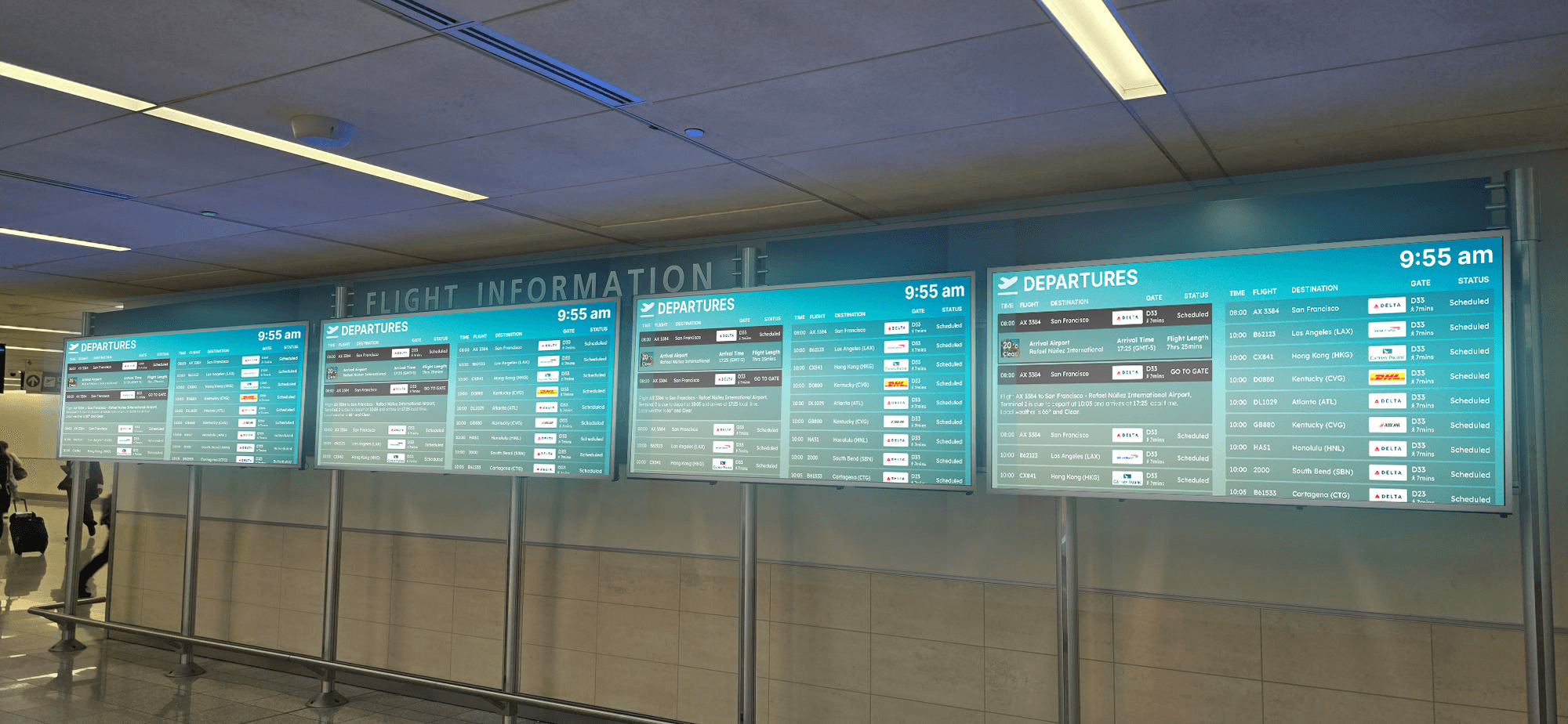
A smart flight information display pulls data from any source, an airport operational database (AODB), individual airline feeds, ground operations systems, and composes it with other live widgets: a terminal map, walk times to every gate, destination spotlight content, and nearby dining or advertising. It is the same underlying infrastructure as the wayfinding kiosk down the concourse, wearing a different template rather than running on separate software.
That distinction matters operationally. Adding a new data source, a new airline feed, a new ground operations system, to a composed FIDS display is an integration exercise on infrastructure that already understands how to combine live feeds. Adding the same data source to a traditional, standalone departures board usually means a separate project with its own vendor and its own timeline.
Answering the next question, not just the last one
A flight time tells a passenger when to leave. A walk time tells them whether they still can. Composing both onto the same screen, alongside live gate changes and boarding status, turns a departures board from a static reference into something a passenger actually plans around, which is precisely the difference between a screen and a connected environment.
This is running today at Hartsfield-Jackson Atlanta International, where flight data feeds the same infrastructure across every screen in the terminal, so a gate change reaches the departures board and the wayfinding kiosk at the same moment, not on separate update cycles [Case study: Hartsfield-Jackson Atlanta]. Passengers standing at either screen see the same version of events, which is what stops a gate change from becoming a source of confusion or a queue at the information desk.
One template, any orientation
Because a smart FIDS display is a template on a shared platform rather than a bespoke build, the same underlying widgets work in landscape on a concourse wall or portrait on a totem, without a separate design or data integration project for each format. A single content and data investment can be reused across every screen orientation and location in the terminal.
That reuse compounds as a terminal grows. A new pier or a redeveloped concourse does not require a fresh flight information system built from scratch, only a new template composed from widgets that already exist and already understand the airport's live data.

The advertising case nobody starts with, but nobody regrets
Because a composed FIDS display already carries live flight and map data, it is a natural surface for advertising and DOOH content that responds to context: a destination promotion that makes sense next to a specific flight, or dining and retail content relevant to the terminal a passenger is actually standing in. Point-solution departure boards, running on a separate content schedule with no access to the live data around them, cannot easily do this.
Most airports do not set out to build this connection between operational data and commercial content. It tends to emerge once flight information is already running on connected infrastructure, and someone on the commercial side notices the data is already there to use.
Bringing it home
The departures board was never the limiting factor. The data feeding it was. Connect that data to the rest of the terminal, and the board itself becomes far more useful without changing the physical screen at all.
See how a connected flight information display compares to a traditional FIDS. Get in touch for a live demo on your own data.
what's next
Want to know more?
Book a consultation with our experts
By submitting this form you agree to our terms.